Friday, February 06, 2009

Conference and canoeing

Just this past few days I have attended the BCCA/FCC camping conference at Stillwood Camp and Conference Centre in Chilliwack, BC. It was a most rewarding time, enjoying the company of many other people (directors, camp cooks, maintenance folk, interns, administrators all others who make a camp run). The world of camping is expanding and growing and changing all the time. What was once considered a way to have fun in the summer is a burgeoning business and a ministry that meets an enormous variety of needs and serves people of all ages all year round. I continue to have a deepening respect for those I work alongside and I hope that you, too, will grow in such respect. The highlights for me are always the connecting and relating to others who are friends, or who, for the first time, become friends in this shared adventure and love I call Christian camping.

Also, very soon, I will again be paddling down the Fraser River to raise monies to support our young volunteers who come to counsel and care for children for the summer months. Please consider this an exciting invitation to support us in our efforts to reward these young people with a bursary for tuition after their months of service. Last year over $70, 000.00 were raised and we hope to continue the momentum! For me, I just enjoy being on the mighty Fraser and steering that large voyageur down that ancient waterway with a bunch of enthusiastic paddlers. If you'd like to donate for such a cause, contact camp Squeah: www.squeah.com.

Saturday, January 17, 2009

The sacrament of marriage

Recently I spent some time chatting with a few of my male friends in Hope and we got onto the topic of marriage. My question to them (and to myself) was, 'why is the line of "you can't have sex until ..." right after the officiator says "I now pronounce you man and wife!"'? Which led to some very interesting discussion. But it was difficult to have an answer to this question. It has been ingrained in me that sex is only morally 'right' in the context of marriage. Which I believe wholeheartedly. But marriage now, consider this thought:

Marriage is an extremely old covenant or arrangement. In the Bible, the first woman is called Adam's wife. Interesting that this is her first title and there's no ceremony (that's recorded). It's simply a truth of her relationship with this man. We aren't given another detailed glimpse into marriage or courtship (apart from reading that, say, Noah has a wife) really, until Isaac and Rebekah get together. And even then we're only told "... and he married Rebekah. So she became his wife, and he loved her;" Gen. 24:67. The first marriage celebration we're invited to learn about is Jacob's marriage to Rachel & Leah.

What is interesting to me about marriage, is it's this cultural phenomenon that has been around for as long as man has lived on the planet. It is accepted as the natural and good event that binds a man and woman together. Nearly EVERY culture has this observance in it. Marriage is a universal relationship within the human race - and by extension, the family unit. And though God gives strict moral laws regarding marriage in the old testament, he does it to solidify and purify the accepted observance that has already been going on for millenia. So, people are married and given in marriage all the time ... and the church has NOTHING TO DO WITH IT! Until ... the church forms. Then, in the first few centuries of christendom the catholic church recognizes a few of the things that Jesus commands us to observe and remember (and a few others that Jesus does not ask us to remember) and calls them sacrements. These 'holy' and sacred events that all believers now should participate in. Here are some definitions of what these sacrements are: "a rite in which God is uniquely active." , "a visible sign of an invisible reality." and "an outward and visible sign of an inward and invisible grace." . The seven sacrements of the Catholic church are: Baptism, Confirmation, Ordination, The Eucharist, Confession, Extreme Unction and Matrimony.

Matrimony, of all these actions (aside from perhaps confession) is the only event listed that was instituted by God before the church came to exist as it does today. Now as the church grew in prominence and power it also used that power to change and create a culture around itself. A 'spiritual' or 'church' culture that all Christians are a part of. This language and rituals and traditions that are unique to the church. What the Catholic church continued to do was limit the view of marriage solely to the authority of the church. So, marriage now loses, over time, it's former cultural context. It now is something condoned only in and through the catholic church. Marriage in any other context is not considered legitimate. Then the reformation happens and the Protestants toss aside a great deal of the values and traditions and cultural ideals and icons that were once associated with the sacrement of Matrimony. But the church does not relinquish its authority over the observance of marriage. So now, I would argue, today, especially in our relatively young and forming North American culture, we have this recognized relationship, honoured and serviced by the churches but with almost NO cultural significance along with it. Marriage is DEPENDANT now on how it is defined by the church in our culture.

Perhaps this is why people are sometimes disallusioned by the idea of marriage (or perhaps the church's way of instituting it). I have a particular relative who chose, against the wishes of his parents, to 'shack up' with the woman he loved. It has been many a year since then and they have exhibited all the positive aspects of a loving marriage from what I can see. They have a young daughter now as well. A number of years after their joining, they decided to go through with a marriage ceremony (more for their parents sakes it seemed to me). Were they any less married before they stood before the officiator? Were they 'living in sin' before they stood to bear witness of their mutual love and commitment to each other?

Don't misunderstand me, I'm not arguing against marraige - but I'm questioning the FORM through which this holy union has changed and become to be in our day and age and region of the world. I have often remarked, with friends nodding accent, that we seem to have lost some of the meaning of marriage when I witness a wedding feast or celebration that is not tied to the western church. Maybe because there is so much culture attached to marriage in places that it seems to have more substance as an observance. I'm not sure. But I've had these thoughts lately. Your thoughts?

Thursday, December 18, 2008

Curses!

Recently I have been intrigued by the amount of opinion and debate over particular controversial issues. In one such comment, somebody made the point that all people continue to live under the curses that God put on us as a result of our disobedience and desire to be separate from God. These curses are known primarily as the curse of death, of pain in childbirth, of an estrangement of the relationship between men and women and a curse upon the land and its ability to produce crops for us easily.

I have been taught that it is biblical (throughout my childhood) that this is still true today, that we live under the effects and consequences of these curses. Which, to a point, I agree. It is true of every human being that they are all to die. No one lives forever. That effect of Eve and Adam's transgression is still in place. As is the possibility of eternal separation from God. And it is true that we also need to work to provide our own sustenance, as it is true that it is a painful ordeal bearing children and there certainly has been a constant strain between the genders through all history.

But how aught we to preceive our lives now under the grace of Christ? This I wrote in response to someone who argued for the inability of all human kind to escape the consequences of these curses:
"We certainly do deal with the consequences of our actions every day, including the first act of disobedience. But I would also be careful how it is we interpret that curse. And I will hazard a new way of viewing the curse of God upon us after the Fall: we view our physical death as the true result of our actions. The consequences of disobedience. I believe that our spiritual death is also a part of this consequence. But through Jesus Christ, death itself has been turned inside out and now, as Christians, our physical death is the means by which we gain immortality and partake of fellowship with God unhindered. Death is not to be feared any more by those who believe! Why then would any other resultant effect of the Fall and its curses be observed as continuing in perpetuity? So then, it would stand to reason that this curse of men in rulership over women might also be stood on its head. Turned inside out. Made to help in the formation of the Kingdom of God, as opposed to opposing it. God has used his own curse on us to give us life, can he not also 'use' any other 'curse' he makes to guide us along to life? Not many Christians would argue with male 'headship' or leadership in the home (however you want to define that). Why is this? Because, for many, it works! Why is that? Not because it's a curse, in my opinion, but because through Christ Jesus, the curses have been made into blessings."

And has God not also turned work into a blessing as well. The need to work and provide for one's family has not changed, but the means and enjoyment by which this is done is something that becomes for us one of our, if not our, prime life fulfillment factor! Now God has turned what we do out of necessity for survival into the greatest opportunity to share the truth and presence of Christ with other people!


Thursday, December 04, 2008

Boredom

What is boredom, really. I have often found the whole idea of boredom somewhat ridiculous. I suppose because I have rarely found myself to be bored. This is likely due to my over active imagination and my ability to entertain myself at any given time. And also my being somewhat intraverted has helped me to be able to find solace and enjoyment whether I'm with others or not. But what causes people to be bored?

It SEEMS to me that bored people are people who are not content. Either not content with their particular activity, or not content with the circumstances they find themselves in. That said, I have certainly felt 'boredom' come on when stuck in converstation with someone I have NOTHING in common with - but then, I think that my boredom is my own fault because even then, I could actively be engaging that person to talk about things I would be interested in ... or I could simply choose to be interested in that person.

People who are bored are, not uncommonly, people who have a variety of amenities and comfort activities that could easily take up time to entertain. It almost seems that the more people seek to do to entertain themselves, the more bored or discontent they become with these activities and their own time. On the flip side, people who have relatively little seem to be able to enjoy life much more easily. Strange isn't it. This is certainly true in children who have been given a variety of toys, or not. Those who are almost forced to creat their own fun and toys seem to be able to have fun and enjoyment in any place or circumstance with whatever they have to make use of. While those who have been given the means to be entertained without having to create or think it out themselves, tend to become restless. Which is something else that is interesting with boredom: bored people are not usually slothful, they're usually restless and busy at trying to find something to entertain themselves with.

Thursday, November 20, 2008

Women as leaders in the 'church'


A friend of mine recently asked me my opinion of women in leadership within the 'church'. I put the word church in quotations because it is the definition of our institutionalized machine that we call church that I am particularly referring to.

So I began thinking about this topic. I have normally kept my distance and simply listened to opinions on this topic because I have never really had any good evidence or advice to form a coherent opinion on the debate and disagreement surrounding it. Though, essentially, I have come to understand, that it is traditionally viewed that women will not receive or attempt to have positions of authority within the church. Also that women will exercise particular restraint when helping to make decisions or simply talking in church. These are, I would hazard to guess, rather conservative views nowadays.

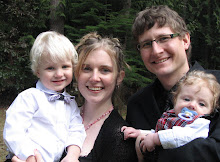
So I asked my beautiful wife Kari (pictured above) what she thought of women in the church and in the process of our conversation, I began to realize how I felt about it and I'll share that with you here:

  • It does not seem reasonable to me to assume that women should be relegated to any particular position of lower authority than men. Partly I come to this conclusion because I find that the Bible is full of women who are leaders (both good and poor). Partly because I believe it is God who calls all people to do and be who and what they are, not people. But it is, and has been the supposed duty of the male dominated authority of the church to discern where best to put people. It has also fallen to those men to interpret scripture as such that we have these particular views of women in the church.
  • It does not seem reasonable to interpret any of the verses that speak directly to women regarding their roles in the church in the epistles as completely literal and blanket truth for all time. These verses (likely more than most) have been examined thoroughly in the context and persons they were written to and about. And a good majority of the conclusions favour interpretations that do not classify or pigeonhole women into narrowly defined roles or responsibilities.
  • Most importantly, in the light of the character of the God I love and serve, it does not seem true that women ought to be thought of as not appropriate for positions of supposed 'high authority'. 1 Corinthians 1:27 - 29 "But God chose the foolish things of the world to shame the wise; God chose the weak things of the world to shame the strong. He chose the lowly things of this world and the despised things—and the things that are not—to nullify the things that are, so that no one may boast before him." If chooses the weak and lowly and despised things to accomplish his purposes, then it stands to reason that God has already 'used' [I have recently despised using this word as such] women to much more greater profit and effectiveness in the Kingdom of God than he has men because of their relatively constant debasement by the male gender. Kind of flips our thoughts of our work for the Lord on it's head.
  • An interesting thought I had during this discussion with my wife was this also, that Jesus had chosen 12 male disciples. He also had numerous female disciples who were with him for a good part of His journeys. I have also found that men seem to place far more importance on numbers than women do. (I'm much more excited to watch the odometer on our vehicle hit 100,000.00 than my wife is). Not sure why this is and it isn't a judgement statement on men or women. But it almost seems to me like Jesus had more than 12 disciples. Creating the number kept the number of committed men down, but then we're told that there were a large number of women who followed and learned from him as well. Were these not also his disciples who learned the ways of Christ and gained an understanding of the good news of God's salvation too??

I'm certainly not trying to men bash here (I am a man!). But I think that the debate about women in authority over men in the church is most often tackled from a limited point of view. We so very rarely look at these type of issues from the perspective of who God is and his character. It would save us all a lot of headache and heartache if we simply knew our Lord well enough to know how he views us.

For the record, I have worked in churches and camps under the authority of women and have visited churches with women pastors and have, for the most part, had no negative opinions on their place because of their gender. If they happen to be poor leaders or poor examples of godly people, then it really doesn't matter whether their male or female, does it?? We may be better suited for particular tasks because of our strengths accorded to us because of our sex, but we ought always to make these decisions in the light of who God is and how it is that He values us.